154% Informational Traffic Increase in 90 Days for Restore Hyper Wellness
In today’s wellness landscape, visibility alone isn’t enough. Brands now compete for trust more than rankings, and as AI increasingly shapes how people discover health information, this trust can only be earned through clarity and real expertise.
For Restore Hyper Wellness, this challenge was especially acute. Operating at the intersection of healthcare and consumer wellness, Restore needed content that could:
educate responsibly,
stand up to medical scrutiny and live within tight regulations,
and still perform in an increasingly crowded and AI-driven search environment.
Together, we set out to transform Restore’s blog from a traditional SEO channel into something more durable: an expert-led authority engine designed to win across search, AI platforms, and owned channels.
I served as a fractional content marketer and hired an external team of qualified writers. Working with the internal marketing team and SME, we aimed to ground content in real medical expertise and to structure it for how people and AI systems actually seek answers. We wanted to create a system that rewarded depth and expertise, not extreme content volume. Producing eight content pieces a month, what followed was a period of compounding growth:
Stronger rankings
Deeper engagement
Recognition by AI-powered discovery tools as a credible voice in wellness and recovery
The Challenge: Content Existed, but Authority Wasn’t Compounding
By the time we began working together, Restore Hyper Wellness already had an active blog and strong brand recognition.
The issue wasn’t a lack of content; it was that the content wasn’t working as a system. Content was thin, many pieces were outdated and lacking true SME input and a unique point of view.
Many of Restore’s most important topics, including NAD⁺, IV Drip Therapy, and Recovery modalities, were losing visibility in search or stalled on page 2+. That limited meaningful discovery, especially for high-intent queries where trust and clarity matter most.
Restore held a clear advantage, i.e., real medical expertise, but it wasn’t fully reflected in search. Subject-matter knowledge existed, but it wasn’t consistently applied across content in a way that search engines and AI systems could recognize as authoritative.
The mechanics of discovery were shifting. AI-generated summaries increasingly appear above traditional search results, and when they do, users are far less likely to click through to websites. With roughly half of consumers now using AI-powered search tools as part of their information journey, content needs to earn not just rankings but also trust and citations in an AI-driven ecosystem.
The Game Plan? A Strategic Shift From Publishing Blog Posts to Building an Authority Engine
Given the challenges Restore faced, the solution couldn’t be a simple increase in content volume. The goal was to turn Restore’s existing expertise into a scalable authority system that could perform across traditional search, AI-driven discovery, and owned channels.
To do that, the team and I focused on five interconnected strategic moves.
Deepening Subject-Matter Expertise
Medical credibility became the foundation of every piece of content. We worked closely with Dr. Rachele Pojednic, Restore’s Chief Science Officer, to ensure expert insight was embedded directly into the content itself.
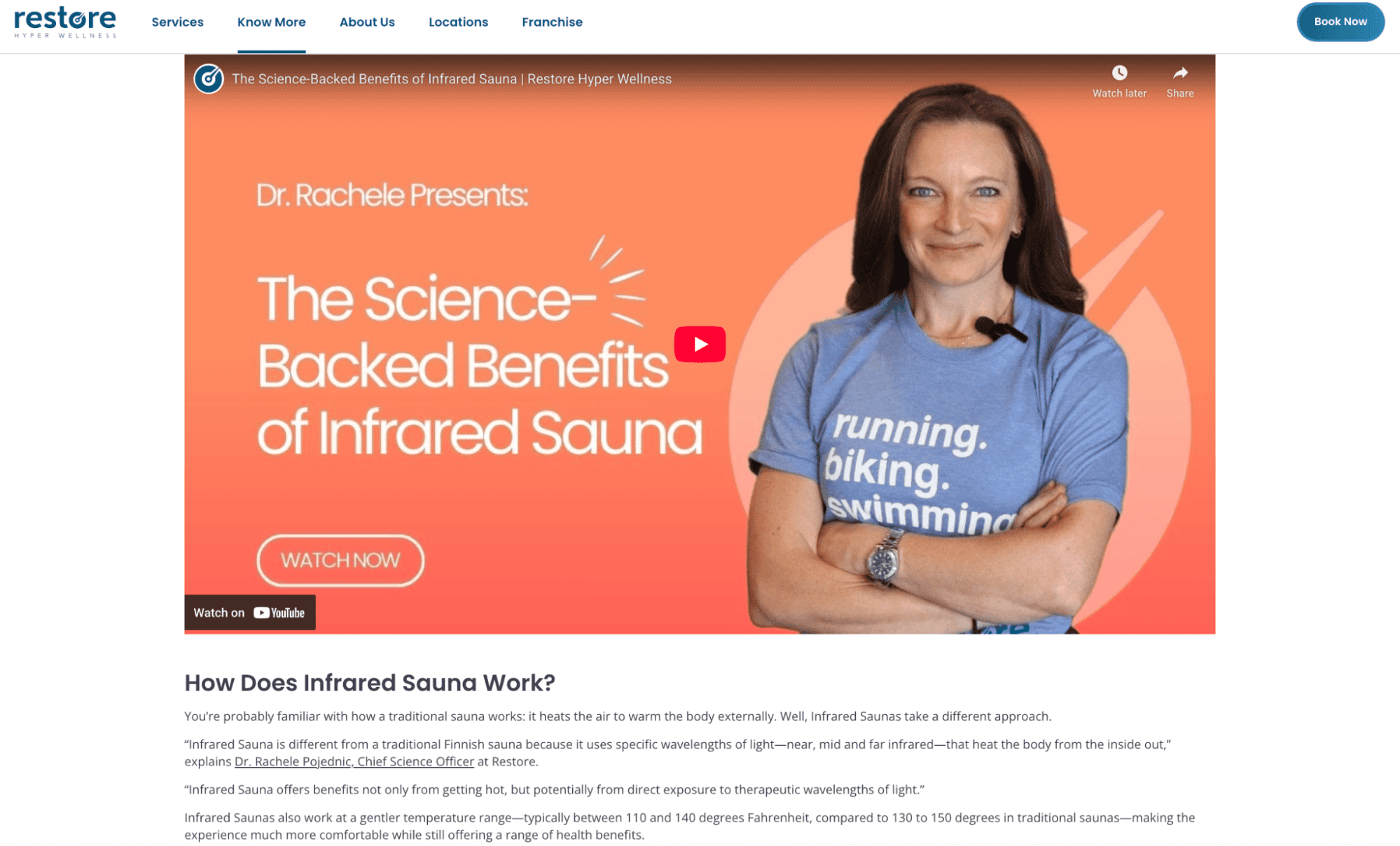
The conversations with Dr. Rachele informed educational articles and supporting multimedia content, which were repurposed into YouTube videos and embedded within articles to reinforce expertise, increase engagement, and deepen topical authority. Here’s a great example of this system at work.
As you can see, this integration made the content medically accurate, current, and—most importantly—credible. These qualities are increasingly rewarded by both search engines and AI systems.
Focusing on High-Intent Content Clusters
Rather than publishing in isolation, we organized content around high-intent therapy clusters directly aligned with Restore’s services, including:
GLP-1s and Semaglutide/Tirzepatide
NAD⁺ and Cellular Health
IV Drip Therapy and Recovery
Red Light Therapy
Building multiple, interconnected articles within each cluster created depth, strengthened internal linking, and signaled relevance and authority across the entire topic rather than relying on single pages to perform on their own.
Expanding and Strengthening Legacy Content
Alongside net-new content, we identified “quick win” existing articles with clear upside and expanded them with updated research, deeper explanations, FAQs, and multimedia.
These weren’t cosmetic edits. They were substantive upgrades designed to meet higher expectations for clarity, completeness, and credibility, especially in health-related queries.
Designing Content for AI-Driven Discovery
As generative search experiences became more prominent, content was structured to be easily understood and referenced by AI systems. This meant:
Concise, question-driven headings
Clear definitions and comparisons
Structured sections that surface answers quickly
Visible author expertise and credentials
We weren’t aiming to “optimize for AI” in isolation, but to make content unambiguous, trustworthy, and citable. These qualities benefit both human readers and search engines.
Supporting Performance Beyond Rankings
Finally, both new and refreshed articles were structured with thoughtful calls to action (CTAs), that guided readers to relevant services or next steps without disrupting the educational experience.
This ensured the content not only educated the readers but also supported real business outcomes while maintaining Restore’s credibility-first approach.
This resulted in an almost immediate uptick in clicks and impressions…
Organic Clicks Doubled in 3 Months (+154%)
In just three months, Restore Hyper Wellness saw a step-change in organic search performance as its expert-led content strategy took hold.
Key indicators of momentum included:
27.5K blog clicks, up from 10.8K in the prior three-month period (+154.6%)
4.89M impressions, up from 1.82M (+168.6%), signaling rapid expansion in search visibility
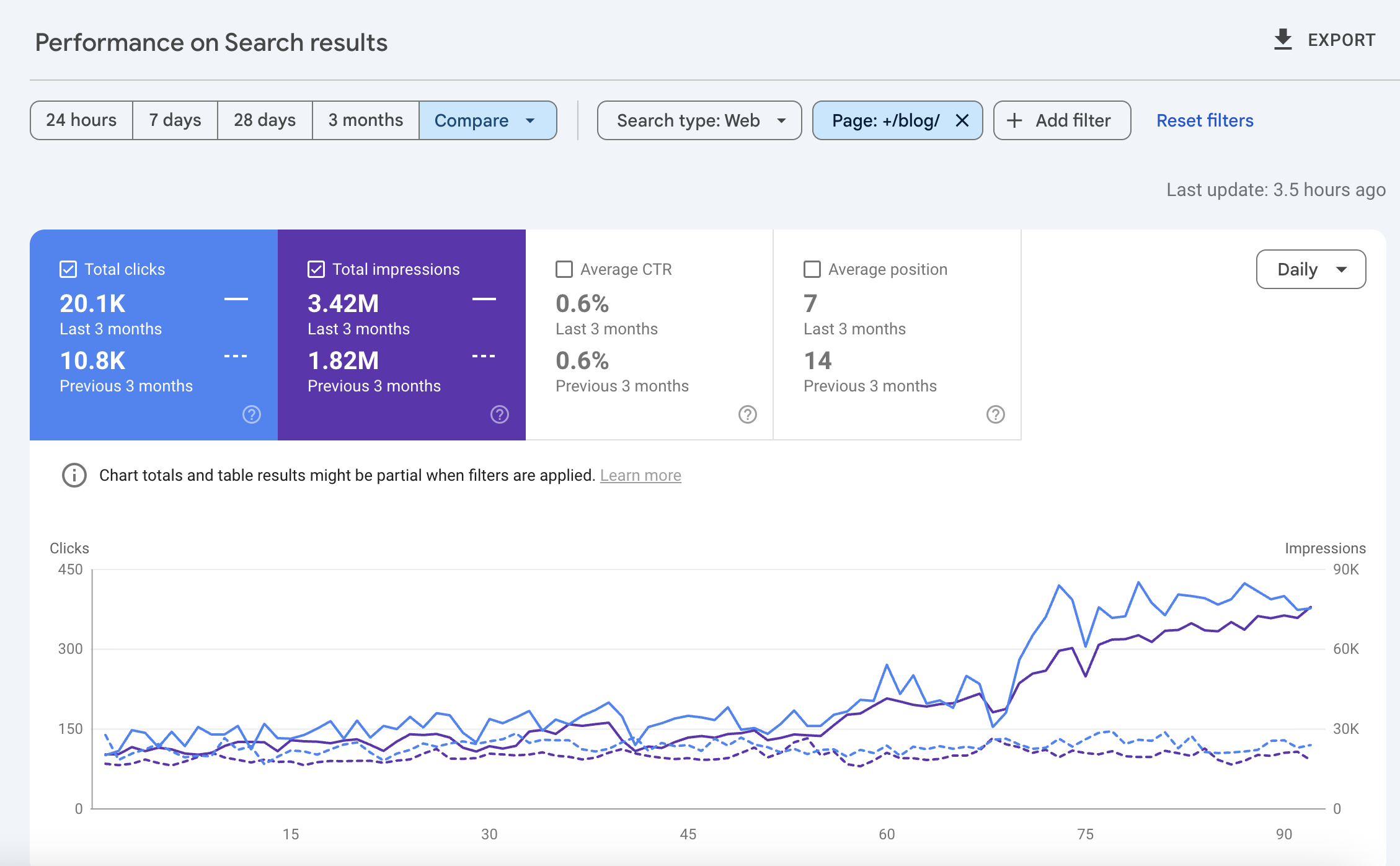
Average position improved from 14 to 7, moving Restore’s content from Page 2 visibility into a consistent Page 1 presence
Year-over-year (YoY) confirmation of growth, with clicks up 52% and impressions up 208% compared to the same period the year before
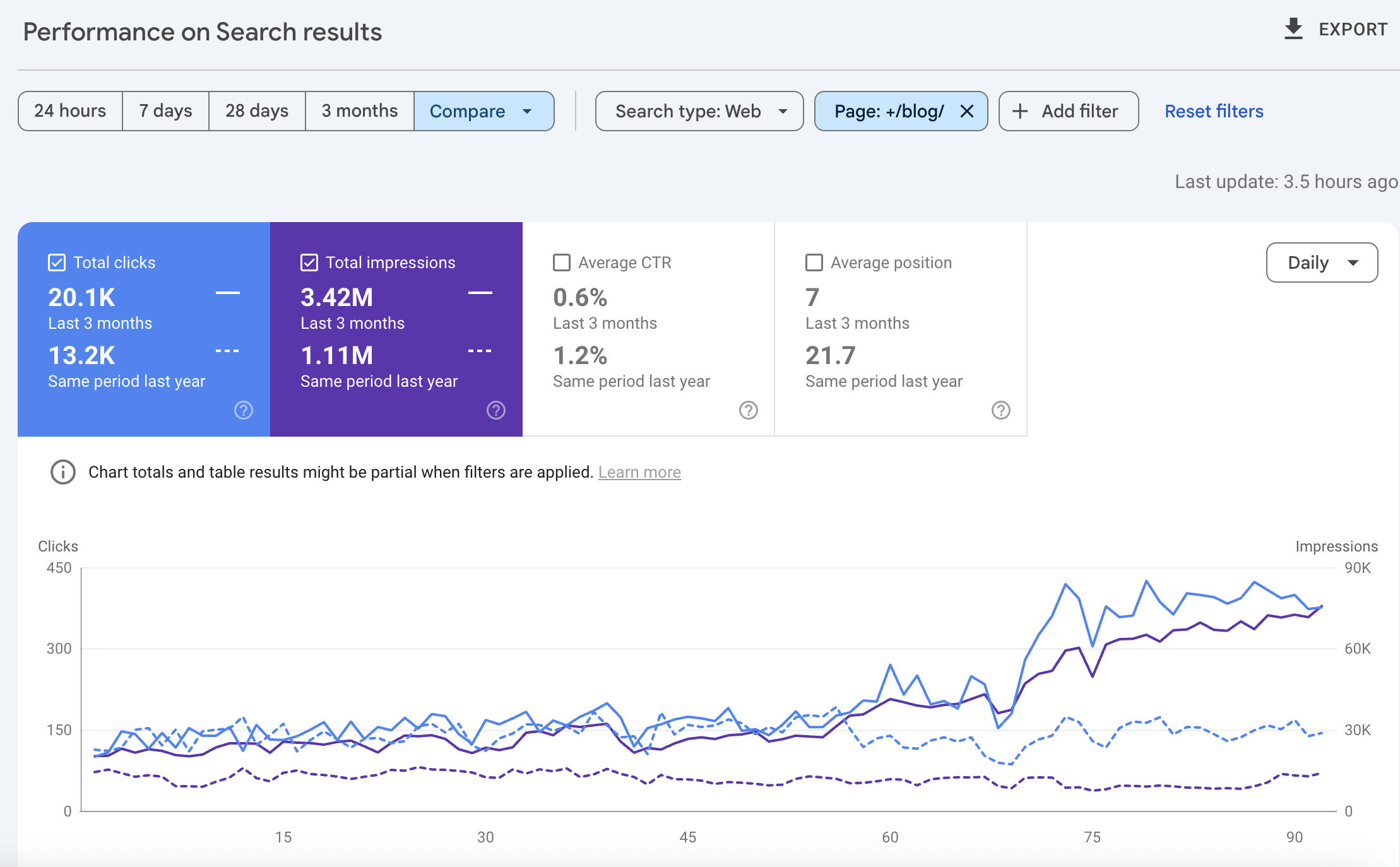
These gains reflected broad-based improvement across Restore’s core therapy topics, including GLP-1s, NAD⁺, IV Therapy, and recovery, rather than isolated wins from a single post or keyword.
High-Intent Articles Drove Deep Engagement (Up to 30+ Minutes on Page)
As Restore’s visibility expanded, engagement metrics confirmed something just as important: readers weren’t skimming anymore. They were staying on the page, consuming content and comparing it.
Across key therapy topics, expert-led, long-form articles consistently drove exceptionally high time on page and repeat interactions, signaling trust and decision-stage intent rather than casual browsing.
Standout engagement highlights included:
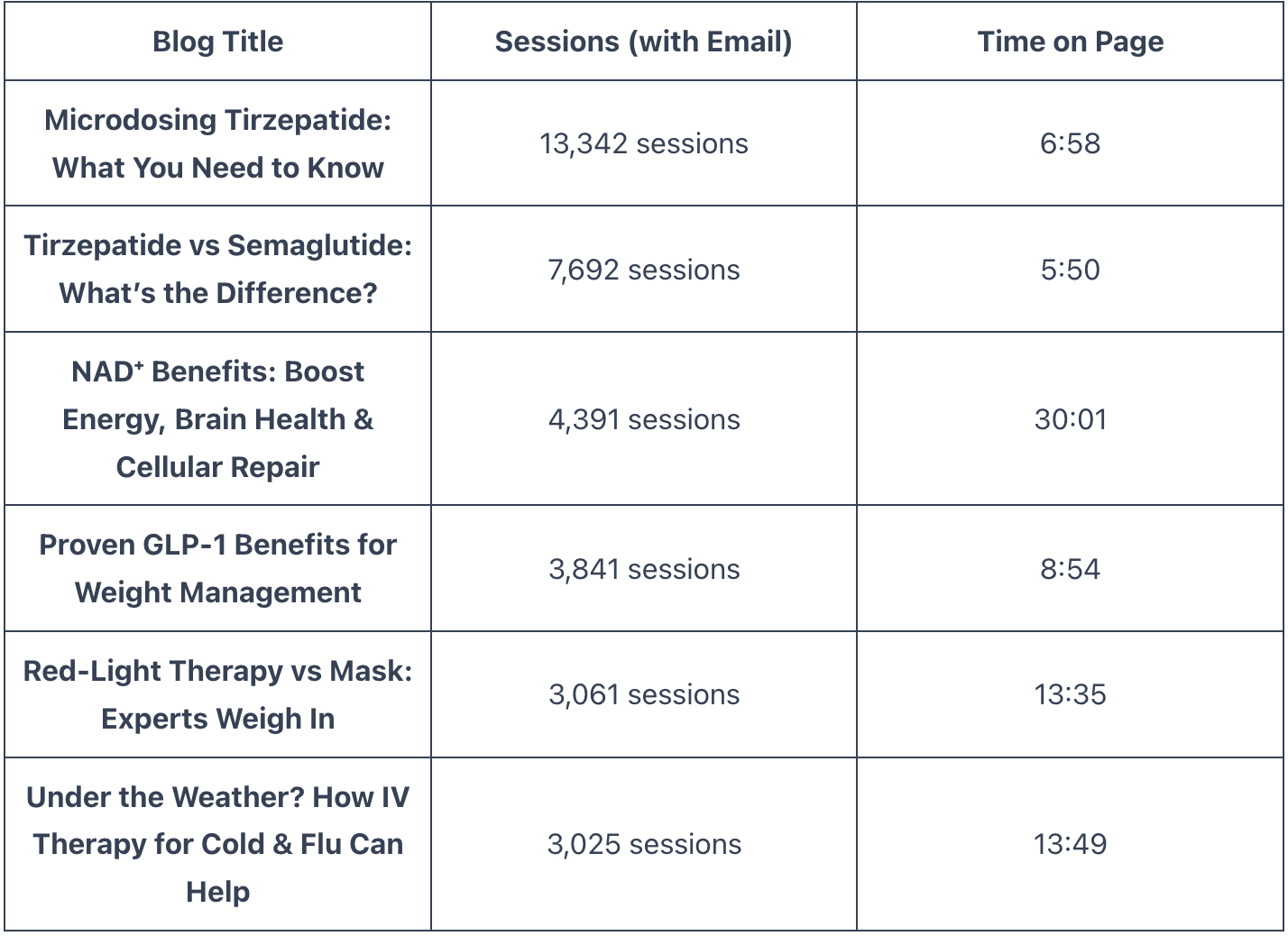
NAD⁺ Benefits: Boost Energy, Brain Health & Cellular Repair: 30:01 average time on page
Microdosing Tirzepatide: What You Need to Know: 13,342 sessions, including strong amplification via email (and tapped into a new vertical for them)
IV Therapy for Cold & Flu: 13:49 average time on page, reflecting high engagement on recovery-focused education
Additional top-performing pieces across GLP-1s, Red Light Therapy, and recovery routinely averaged 5–13+ minutes of time on page, reinforcing that users were actively consuming content rather than bouncing after a quick answer.
These engagement signals are what you expect when content is expert-led and decision-useful: readers who land on the page, stay there, compare their options, and feel confident to make a decision.
Rewritten Content Saw 2x–8x Growth
We identified legacy content ripe for quick wins and updated it with new research, more in-depth content, FAQs and multimedia. In several cases, refreshed cornerstone articles quickly outperformed prior versions.
For example:
/blog/top‑benefits‑nad: Active users up 168%, engaged sessions up 91% and sessions up 145%.
/blog/immunity‑iv‑therapy‑cold‑flu: Active users up 724%, engaged sessions up 648% and sessions up 794%.
/blog/top‑benefits‑coenzyme‑q10‑coq10: Active users up 279%, engaged sessions up 223% and sessions up 279%.
/blog/natural‑ways‑to‑boost‑nad: Active users up 55%, engaged sessions up 20% and sessions up 58%.
/blog/niagen‑nr‑is‑superior‑to‑nad‑therapy: Active users up 70%, engaged sessions up 39% and sessions up 68%.
These results confirm our hypothesis that updating old content with new research drives significant gains.
Cited Hundreds of Times Across AI Platforms in One Quarter
As Restore’s content gained depth and page-one visibility, its impact extended beyond traditional search results. AI-powered discovery systems began consistently surfacing Restore content as a trusted source for health and wellness answers.
In a single quarter, Restore articles were cited hundreds of times across major AI platforms. This outcome was driven by authoritative content without using any experimentation or shortcuts.
AI visibility highlights included:
Google AI Overviews: 240 citations, up from 31 in the previous period
ChatGPT (Browse with Bing): 215 citations, up from 33
Gemini: 125 citations, up from approximately 36
Perplexity: 42 citations, more than double the prior period
Copilot: 22 citations, up from 3
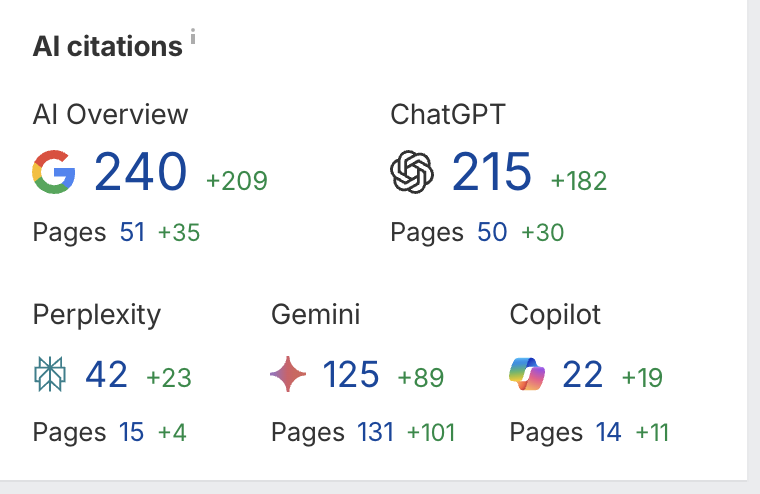
In total, dozens of individual Restore pages were referenced across these platforms, indicating that AI systems had begun treating Restore Hyper Wellness as a credible source. These citations extended Restore’s reach beyond traditional clicks, positioning the brand for the future of search-driven discovery.
Expert-Led Content Drove High-Intent Engagement Beyond Search
Beyond organic search, the content we created consistently drove engagement across owned channels, particularly email. When expert-led articles were featured in Restore’s newsletter, they reliably generated some of the strongest click-through and on-site engagement of content in 2025.
Alongside promotional messaging, Restore’s newsletter leveraged educational content to meet subscribers where they were in their health journey, reinforcing trust while driving meaningful site activity.
Newsletter-driven engagement highlights included:
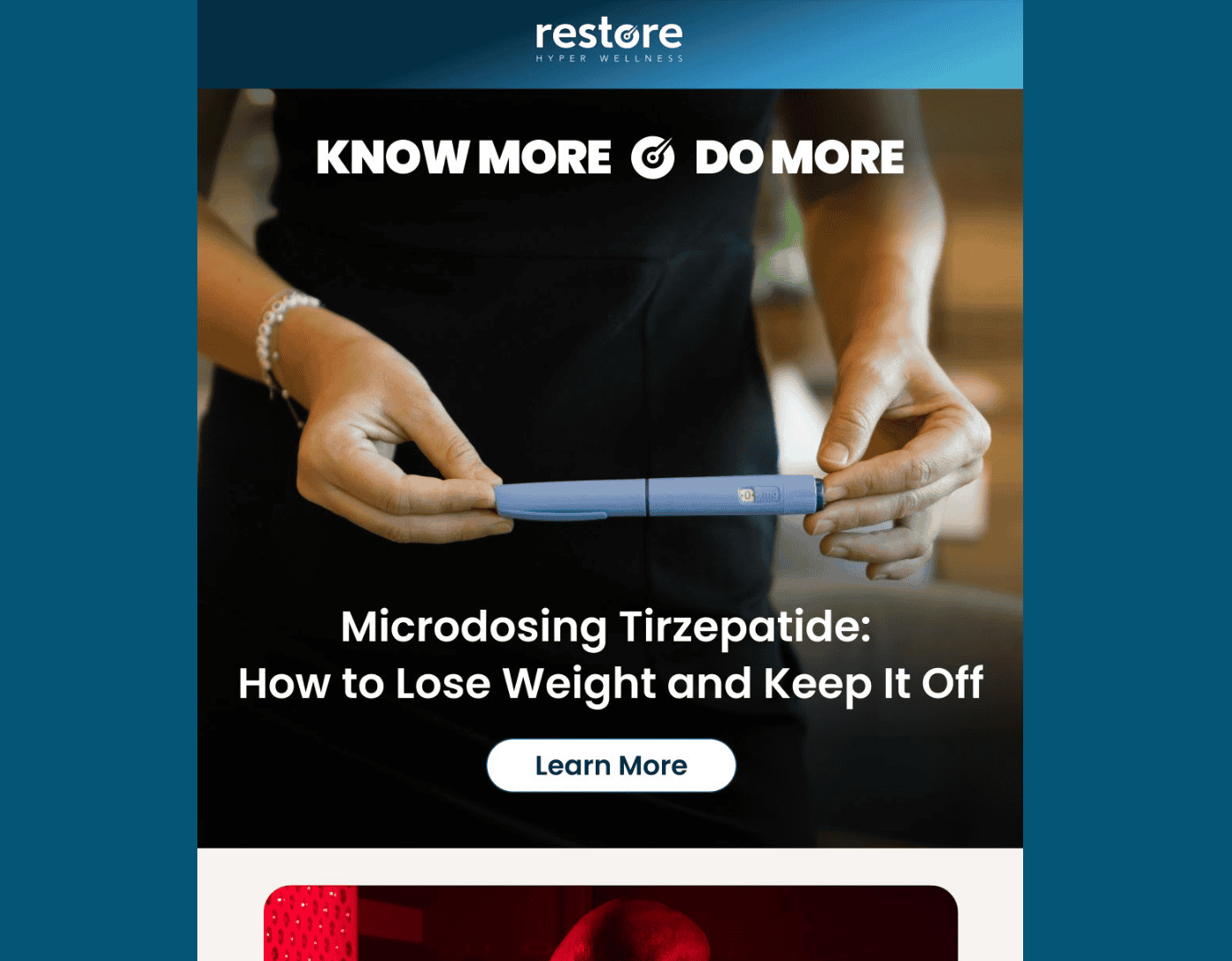
Microdosing Tirzepatide: 8,971 sessions via email, making it the single highest-performing newsletter article in the period
Proven GLP-1 Benefits for Weight Management: 2,849 sessions via email, confirming strong demand for science-backed weight management education
How to Replace Electrolytes for Better Energy, Hydration, and Recovery: 2,156 sessions via email
Across multiple sends, the same topics that performed well in organic search also drove the highest engagement in email, a strong signal that Restore’s content strategy supported both acquisition and retention.
What This Means for Modern Content-Led Growth
Restore’s performance highlights a broader shift in how content-driven growth works today, especially in regulated, trust-sensitive categories.
Visibility is no longer earned through volume alone. It’s earned by aligning real expertise, clear intent, and content designed for modern discovery into a system that compounds over time.
This case shows what happens when content is treated not as a traffic tactic, but as a strategic asset. Content that:
Performs in high-intent search moments
Reinforces trust through owned channels like email and social
Increasingly earns recognition within AI-powered discovery experiences
When content is credible and decision-useful, it becomes a reference point. That’s what allows gains in visibility to translate into deeper engagement, repeat touchpoints, and long-term authority.
For brands navigating competitive markets and evolving search behavior, this approach creates leverage. Each expert insight, article, and update strengthens the next, making future growth more efficient.